lJLIEIA l iVe LHAHAL I LHC)
8G1M)UJP.,M

Carolina Anselmo Nishino •
ATIRIBUTES AND TRANSFORMtJG ALlES
·n.._. = 't,.- -•
!- 6
*o £
put it on layers
(<.ftf.) -
§
- sciten its lines, its edges
- tesselate (construct anet \
withisbasicform) I' "' 'rc,:; .:lt "
- dissolve into fracu>Js \ • • ;) /,; _:,! -abstract it
- use onlY ba.sic tools
(hke lines,do!s)
- gestak it (create the mage of a cube without drawing it)
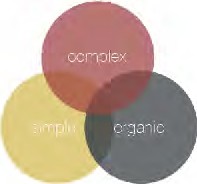
At the begging it was a challenge to identtfy which are the adjectives (attributes) that I like in other projects, movies, songs. They are usually empincal. so it was a really introspective process to understand why they please me. I recognized my admiration for the organic shapes, in nature or in projects inspired by it. And despite being opposite characteristics,I chose COMPLEX and SIMPLE. They can be opposite between each other, but can also be connected. Also to translate it into transforming rules was a challenge. It's a more methodical process.
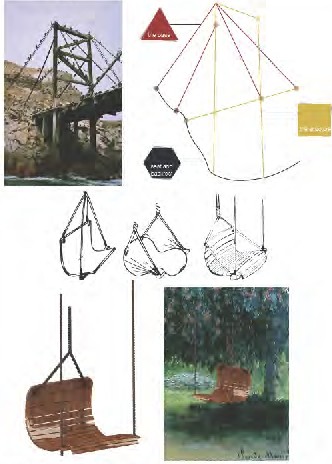
In the first project I decided to do a lamp. It was the first experience choosing a catalyst and interpreting into a impression
of the paradigm. It was again an methodical way to analyse the catalyst in organizational rules and how to transport it into the events of my theme, the lamp. Afterwards, when changing rnto different scenarios it was really possible to generate different and more complex results, using the transforming rules along with the paradigm.
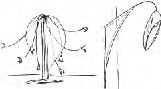
In the second project it was easier to recognize the organizational pattem in the catalyst. How it connected itself, the intersections, and how I could use it to organize my second paradigm. Then, the transformations came easier and the final
result was more pleasent to me. I could identify myself in the project.
)))
CATAlYST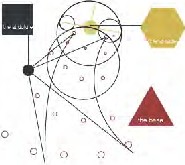
PARADIGM
CATALYST
PARADIGM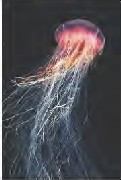

•
"Do tugar onde estou ja tui embora" (Manoel de Barros) - Da dove sono gia sono partita (trad it) -From the place I am, I already lett (trans/_ eng.)