MILAN L'E'UN GRAN MILAN
-Jiilan is a great _lfila n -
During the course of Generative Design held bx Cele stino Soddu and Enrica Colabella at Politecnico di J![ilano (Sept./Feb. 2014) I have learned a new creati ve method to generate new ideas and improve the complexil:) .and qualz'l:) .of mxprojects.
The generative method is a new kind of approach to
reach eve!)· time a high qua hi)· and a recognizable (riconoscibile x lo stile) project that riflects the wa)· we understand the design.
Building step b)· step the sequence of the rules that we will use during the process we integrate them to our personal intelpretations that give at the final "script" a recogni'zabilit)'' and characterization.
The generative approach is about the transformation
of the form, giving a range of possible variations of results.
From mJpointofvie'v, this is the most important thing about generative design: the result of the project is not a finished form but a sequence of changing results. The first thing to do to start a generative project is
finding three attributes.
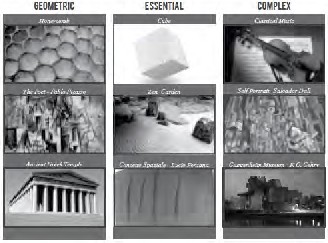
The attributes are three fonda mental things that best represent our idea of design.
Then we must find some references to the attributes.
References can be anything (abstract or phisical things) that can help define our interpretation of the attributes.
Once this phase is ove1; we can start to build the tran
forming rules.
This is the most important phase of the process.
The purpose oftrasforming rules is to apply one of the attributes to the form through a transformation.
There maJ ·be many I] pes of transformation for each attribute. These rules can be changed in the course of time, but they- contain our s yle and personal interpre-

ATTRIBUTESANDREFERENCES
tation and can be applied to all)·project.
Once we define a range of rules in relation to our attributes, we have the basic tools to start a generative project.
The next step is finding a catalj-st to start the genera
tive process. A catalxst is a picture, a portrait or aTI) thing we like that possibl;· has nothing to do with the project.
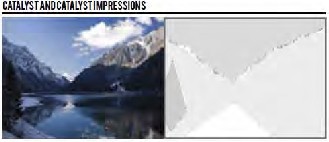
TVith the catalj·st we can find the catalj-st z'mpressions that are a sequence of relations between the elements of the catal;rst that we will put in the paradigm. The relations that we find in the catalj -st impressions must be linked to our attributes.
The paradigm is the scheme of relations and elements
of our project. The type of relation between the elements comes from the catalj•-st impressions and is adapted to the project.
EXAMPLEOF POSSIBLE VARIATIONS
The result of this phase is an abstract diagram that shows the connections and the elements of our project. Hie can now start the tranformations.
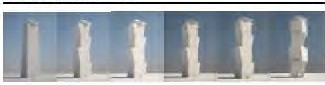
The first scenario is made of simple forms related to the cata(J-st, and from this we start to applj· the tran sforming rules to the single elements step b)· step, generating a sequence of transformations.
There is no end to transformations, and the result z's a
variel)' of possible solutions.