''Chi non risica non rosica'' by Nicole Leonardi
I approached the generative design aimed to fashion, in particular to the creation of clothing and accessories.
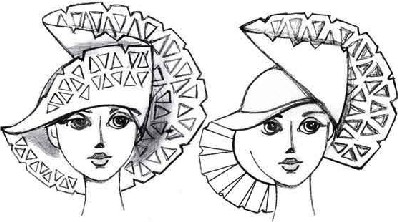
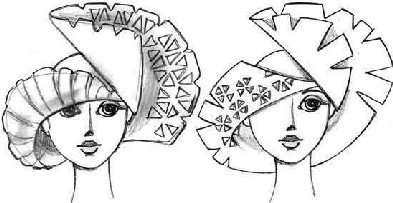
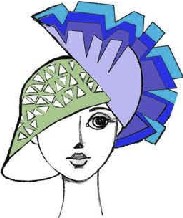
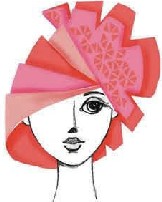
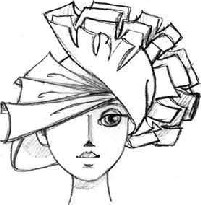
In my first exercise I thought to draw an hat. In order to understand the new subject, the idea of drawing a hat satisfied, in my opinion, two important requirements. On the one hand, the hat is one of the simpler accessories because It is made by a close number of elements: the central part that contains the head, the brim and some personal details. On the other hand, It deals with very particular creative solutions. Regarding the choice of the attributes, now, after these last months spent to get into the subject more deeply, trying to reach a personal use of the generative design, I believe that the choice of the attributes should represent the main idea, the design. Regarding fashion, in this circumstance, I think could be interesting to consider the trends, the dominant stile, avoiding to make copies, but rather just to ''be ahead" with awareness. I started to think to these attributes as they were a trademark.
The rules of transformation became a sort of code and thanks to them I could exactly
define "how" to increase the character of every elements.
The choice of specific codes of processing and transformation means to make a real stilistic choice. The designer takes a route, draws a map that at the same time is well defined regarding some aspects and open to many other, endless possibilities. Personally, I instinctively tried to balance the rules of transformation, for example introducing elements that fit better to the structure and other ones to the decorative details, the materials and the colors.
Moreover, the design of clothing (and of accessories) is strongly related to the kind of people who wear it and to the situations in which people can wear it. I simply wanted that the many possibilities that were opening in front of me were all beauty and
interesting.
attributes.·
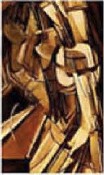
DYNAMIC
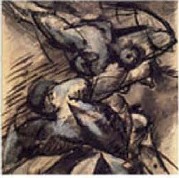
LIGHT
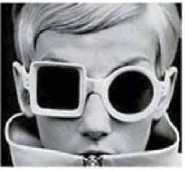
ASYMMETRIC
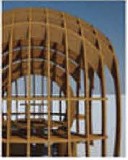
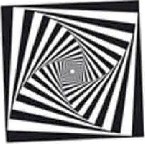
tepe 1 tnefTf tum e menl 'Olff limes repeal the elemenl two contr. $1 colors
. 'e t than betcr" pt!fpendicular




112
l1(pl. r s/r{JpfJ Vfsqu. Plld txWrasl CD.tcfs tMerent
nresst.Hr.mrent
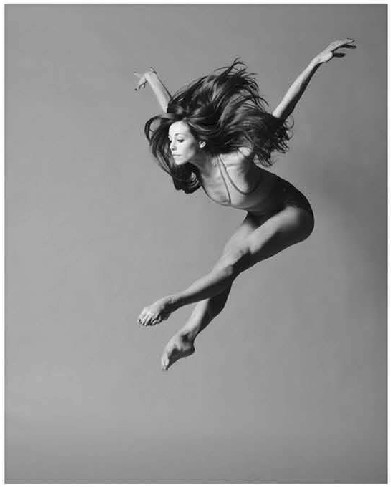
As catalyst, in both works I chose a figurative image. For the design of the hat, I chose a picture of a dancer who already had the attributes I had chosen. The jump of the dancer represents both the dynamism and the lightness. Besides, the dancer herself represents the lightness.
Finally, in the picture the asymmetry was represented by the decentered position of some element, like the dancer (the main character in the picture) that has been collocated in the upper righ.
On the contrary, in my second exercise, instead of an image linked to three attributes, I chose a catalyst not connected with them.
So I chose an artistic illustration with the stick figure of Marylin Monroe with some balloons. It was a colored image, quite graphic and synthetic. The catalyst, in particular the choice of this illustration, has represented for me a different phase, the one of the play, in its purest meaning.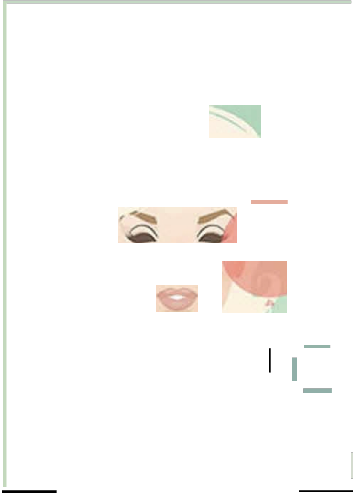
 • • •
• • •
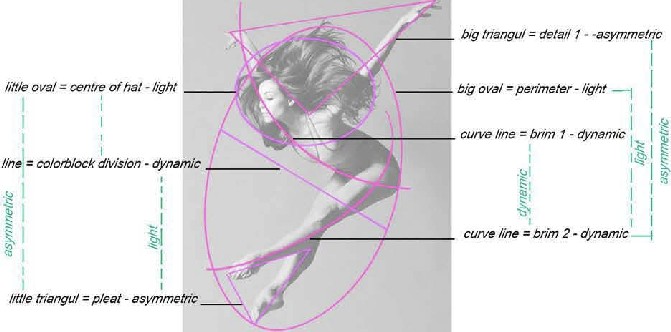
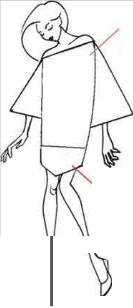
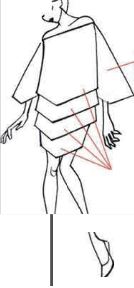
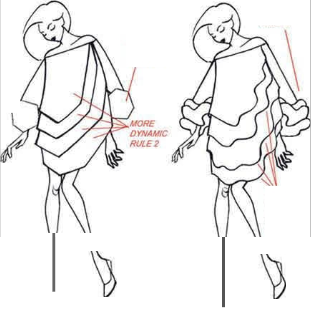
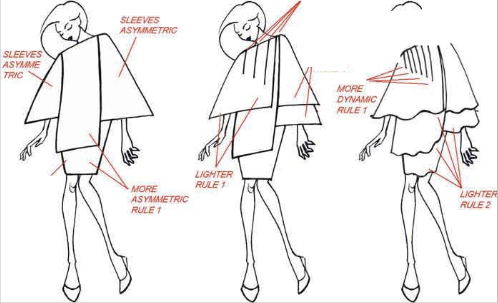
The most difficult part is to define what is the paradigm. The paradigm represents the structure of the generative process as it combines the element of imagination, or better the personal vision of the catalyst with the attributes and the theme. The paradigm is the assembled skeleton of the design. Again, the distribution of the relations between the elements is not random but is managed by an approach that in the personal sensitivity and in the meaningfulness of the design solves their own choices.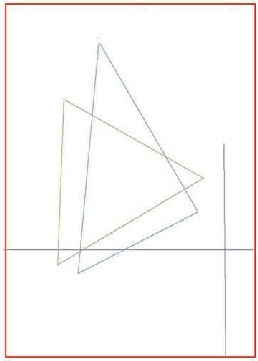
PARADIGM LOGICAL CONNECTION ATTRIBUTES PARADIGM LOGICAL CONNECTION ATTRIBUTES

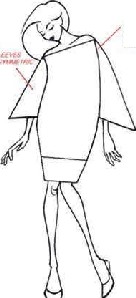
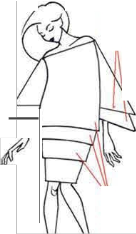
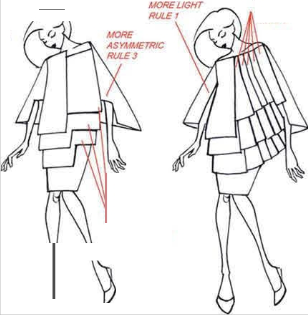
shape of dress- asymmetric shape for sleeve -asymmetric
cuts front dress - dynamic shape for sleeve. -asymmetric
---------- --- --
light :S
--------- ;--]--- Q) Ill
dynamic 1::
=---==-=-- }i t-_ asymm c "


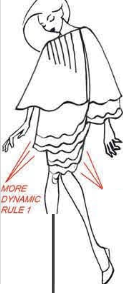
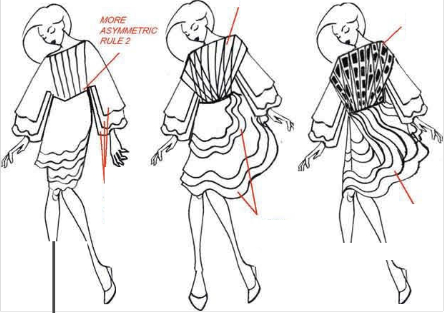
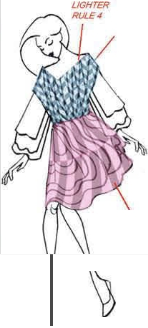
In both cases, in the design of the hat and in the one of the dress, the development of the scenario was very interesting. Personally, in the case of the hat, it seemed to me that the solutions came easily, extremely appropriate and thrilling at the same time, even already regarding purely the design. On the contrary, in the case of the dress, I followed a much more wise and thoughtful procedure because, although again thousands of ideas and possibilities came spontaneously, I prefered to be very careful to keep an extreme balance between the elements. In conclusion, the experience of
the generative design is very stimulating for creative people, because it really helps to find new artistic possibilities, to develop more incisive characters and also to create
unexpected connections between the artistic disciplines.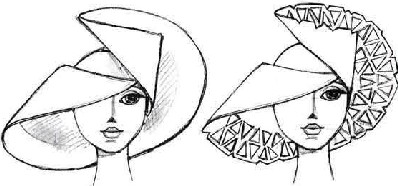
SCENARIO 1 SCENARI02 SCENARI03 SCENARI04
PROFILE
SHAPE·
RlllE I
LIGHTER

c{.)
SLEEVES
RUJ.E2
MORE
ASYMMETRIC /"--
MORE DYNAMIC RUI.E2
MORE ASYMMETRIC
f.; RULE2
FIRST SCENARIO
RULE f • LIGHTER
RULE 2· MORE DYNAMIC
SECOND SCENARIO
RULE 2 ·LIGHTER RULE 3·LIGHTER
MORE ASYMMETRIC RULE2
SHAPE RULE 1
MORE DYNAMIC
RUJ.E2
MORE ASYMMETRIC
PROFilE MORE ASYMMETRIC RUJ.E2
SCENAR/01 SCENARI02 SCENARI03 SCENARI04
THIRD SCENARIO FOURTH SCENARIO
RULE f ·MORE ASYMMETRIC RULEf ·MORE ASYMMETRIC RULE·f · MORE DYNAMIC
SHAPE RUlEt LIGHTER
SHAPE RULE 1
MORE" DYNAMIC
SHAPE
RUlEf
MORE DYNAMIC
MORE ASYMMETRIC RULE3
MORE DYNAMIC RLILE3

FIFTH SCENARIO
RULE2- MOREDYNAMIC
SIXTH SCENARIO
RULE 3·MORE ASYMMETRIC
SCENARIO 1 SCENAR/02 SCENARI03 SCENARIO I/

MORE DYNAMIC RUJ.EI
MORE | f"\, ..A.L-.; | ?f"' |
DYNAMIC RUJ.E1 | \, , |
SEVENTH SCENARIO
RULE 4·MORE LIGHT
RULE 4 -MORE ASYMMETRIC
EIGHTH SCENARIO
RULE 4·LIGHTER
SHAPE MORE LIGHT RUL£1
MORE DYNAMIC RULE1
NINETH SCENARIO
RULE f ·MORE DYNAMIC
SCENA£105 SCENARI06 SCENARIO? SCENARI08
MORE DYNAMIC
RUJ.E2 LIGHTER
RUJ.E3
MORE DYNAMIC RULE4
Nicole Leonardi
Master student at Politecnico di Milano
Design for fashion system
MORE DYNAMIC
RULE1 MORE DYNAMIC RULE2
MORE DYNAMIC RULE3
MORE ASYMMETRIC RUJ.E4